Monday, April 8, 2013

50 Years of the Porsche 911

By James Tate of MSN Autos


From its debut at the 1963 Frankfurt Motor Show to the presentation of the 2014 GT3 at the 2013 Geneva Motor Show, the Porsche 911 has earned its place as one of the best "driver's cars" ever produced. In an era when words such as "epic," "iconic" and "legendary" are as lazily tossed out as pickles on a Quarter Pounder, the 911 continues to demonstrate what a sports car is all about. Let's look at milestones in the 911's 50-year history and ponder how a single car model can evolve so relentlessly yet remain so connected to its roots.


1963 Porsche 901

The original 911 was revealed to press and public at the 1963 Frankfurt Motor Show as the 901. Peugeot objected to another manufacturer using a three-digit code with a zero in the middle — the French automaker had decided that this was its "thing," as in the Peugeot 404 — so Porsche devised the simple solution of making the middle digit the number "1" instead. Eighty-two 901s were built and designated as prototypes never to be sold to the public, although some have ended up in collections of the privileged few. The 901 is immediately recognizable to 911 fans, with its classic, sweeping roofline and long nose.


1964 Porsche 911

The first production version of the 911, the 1964 model hit the road with a 2.0-liter 130-horsepower flat-6 boxer engine mounted behind the rear axle. Reviews vacillated between praise for the 911's handling and its 5-speed manual gearbox and exasperation over its unusual engine placement and the amount of effort put into what was seen at the time as a souped-up Beetle. The first-run 911 is an elegant snapshot of what it meant to be a sports car in the mid-'60s: stylish lines with fair but not jaw-dropping performance. Every 911 since can trace its heritage to the '64, whose design holds to this day.


1966 Porsche 911S

The 911S variant introduced in 1966 heralded the era of the 911 as a competitive racer and performance driving machine. Internally, the 911S 2.0-liter engine was boosted by 30 horsepower for a total of 160, along with a stiffened chassis and bigger brakes. On the outside, the most recognizable change for 911 enthusiasts was the introduction of the Fuchs 5-spoke wheels, which shaved a not-insubstantial 20 pounds off the 911S.


1967 Porsche 911L, 911T

For the 1967 model year, Porsche expanded the 911 lineup, creating what's now known as the A series. In addition to the performance-minded 911S, Porsche introduced the 911T and 911L. The 911L was a luxury variant that shared many features with the S but retained the standard 130-horsepower engine and larger brakes, along with various changes to trim pieces. The 911T was added as an entry-level 911. Although producing only 110 horsepower from the same 2.0-liter displacement as its siblings, the 911T is a fine performer compared with the L, and enjoys its own dedicated fan base.


1967 Porsche 911 Targa

With the looming possibility of the United States government banning the production of convertibles because of safety concerns, Porsche responded with a master stroke: the 911 Targa. The Targa integrated a steel roll bar into the design of the 911, with a removable roof panel and fold-down plastic rear window. Despite the U.S. deciding against the convertible ban, the unique open-air experience of the 911 Targa proved popular enough that it remains to this day.


1969 Porsche 911E

Porsche made its first set of major adjustments to the 911 with the 1969 B-series models. The 911E became the new standard 911, replacing the 911L. New features included a longer wheelbase to optimize weight distribution and fuel injection on the 2.0-liter version -- the E stands for "einspritz," or "injection" -- which raised the horsepower to 140. The B-series 911S kept a conventional setup and produced 170 horsepower. The B-series 911's design stands out mostly for the slight flare in its rear fenders, as larger tires were beginning to find their way aboard to further improve handling.


1970-1972 Porsche 911 C- and D-series

The first displacement increase in the 911 came with the 2.2-liter engines found in the C-series models, beginning with the 1970 version. The output of the 911E jumped to 155 horsepower, the 911T increased to 125 horsepower, and the sportier 911S got a robust 180 horsepower. The S kept the torque curve of the previous versions, while for the T and E, power became more even through the rev range, so drivers didn't have to keep their engines fully revved at all times to optimize response.


1973 Porsche 911 Carrera 2.7 RS, 2.8 RSR

Considered by many to be the ideal 911, the 1973 Carrera RS was a special production run of 500 cars to fulfill the requirements needed to participate in GT racing. With a "duck-tail" rear spoiler and a bored-out version of the F-series 911S engine churning out 210 horsepower, the Carrera RS was a force of nature. The 2.8 RSR was a full-bore race car, and proved its merit almost immediately after debuting at the 1973 24 Hours at Daytona. The 2.8 would go on to win the 1973 European GT Championship and many races, establishing itself and its road-going 2.7 counterpart as the Holy Grail for 911 fans everywhere.


1974-75 Porsche 911 Carrera

The popularity of the limited Carrera RS model inspired Porsche to keep the Carrera name as the designation for its high-performance model. The 1974 911 Carrera kept the 2.7-liter 210-horsepower engine from the RS without the lightened body panels for most of the world markets; with the U.S. tightening emissions regulations, American-bound Carreras used the 175-horsepower 911S engine instead. The 1974-1975 Carrera also saw the introduction of some now-iconic design elements: the "whale-tail" rear spoiler and impact-absorbing front and rear bumpers.


1975 Porsche 911 3.0-liter Turbo

After the uproar over the Carrera RS, Porsche pushed to outdo itself once again. The result was one of the most recognizable vehicles of its era: the 911 Turbo. Featuring a turbocharged version of the 3.0-liter engine from the Carrera RS race car, the 911 Turbo combined 260 horsepower with a weight of just over 2,600 pounds to send heart rates skyrocketing. The only aspect of the car's performance as legendary as its turbo lag was its tendency to punish drivers who drove it with less than total concentration. The design of the Turbo with the whale-tail spoiler and flared fenders, however, influenced the look of the 911 for decades to come.


Porsche 935

The Porsche 935 racers grew out of the original 911 Turbo program, winning races and championships to become some of the most successful race cars of their era. Varying between 560 and nearly 800 horsepower, 935s tormented all comers at Le Mans in the late 1970s, placing multiple times and winning the 1979 overall title. Through 1984, the 935 fleet won 150 races, including multiple wins at the 24 Hours at Daytona, 12 Hours of Sebring, and 1,000-kilometer Nürburgring events. The 935-era liveries are still proudly celebrated and worn by race fans the world over.


1978 Porsche 911 3.3-liter Turbo

The higher-displacement 3.3-liter 911 Turbo that debuted in 1978 corrected the shortcomings of the 3.0-liter version with a vengeance. Not only did the new engine raise the horsepower to 300, but the new Turbo had an intercooler that necessitated an entirely new spoiler to contain it -- the "tea tray" -- as well as an indicator light inside to better prepare drivers for the turbo kick that awaited them. The brakes, taken from the 917 race car, were to remain on the Turbo essentially unchanged through the late 1980s.


1978 Porsche 911SC

The 911SC carried over much of the 3.0-liter Carrera that came before it, and would be the standard 911 model for the next five years. Emissions-control equipment dropped the horsepower to 180 from 200 in U.S. cars, but a flatter torque curve improved low-end capability. Available as a Targa or with a whale-tail spoiler and 16-inch Fuchs wheels in Sport trim, many SCs survive today as relatively inexpensive, tough and dependable daily-driver 911s.


1984 Porsche Carrera 3.2

The 911 standard of the 1980s, the Carrera 3.2 was very similar to the 911SC it replaced, save for a new 3.2-liter engine good for 231 horsepower and with better fuel efficiency, thanks to the first electronic control unit featured in a production 911. Later on, the 915 5-speed gearbox that the Carrera inherited from the SC was replaced with a Getrag G50 unit. Made from 1987 on, the Getrag-equipped Carreras are among the most "common" 911s sought after by enthusiasts.


1986 Porsche 930S

Any minimal design change to the 911 can set off heated arguments among fans, so you can imagine what happened when the world got a look at the "slant nose." Borrowing its distinctive front end from the 935 racers of the late 1970s, the 930S was the next evolution of the 911 Turbo. The 930S had a larger turbocharger than the 911 Turbo, large enough to gain 30 horsepower for a total of 330. The 930S was all angles, attitude and grunt — and its fans wouldn't have it any other way.


1986 Porsche 959

The 1986 959 threw down the gauntlet to the world: The modern era of supercars was upon us, and everyone else was going to have to play catch-up. The twin-turbocharged flat-6 engine pushed 450 horsepower through an all-wheel-drive system that — combined with the low, 3,200-pound curb weight provided by the use of carbon-fiber body panels — allowed the 959 to hit 60 mph in less than four seconds and reach a top speed just under 200 mph. The 959 won the Paris-Dakar rally in 1986. Porsche decided to retire the 959 while it was on top, building an endurance racing version known as the 961, which won the experimental class in the 1986 24 Hours at Le Mans, the first all-wheel-drive car to win at Le Mans in any category.


1989 Porsche 911 Carrera 4 (964)

The 911 Carrera received a major update for the 1989 model year. For the first time, all-wheel drive was offered in a 911; also a first were standard anti-lock brakes. The Carrera 4's engine displacement was increased to 3.6 liters, generating 250 horsepower. The 964, as it came to be known, was available for only a few years before being replaced by the 993 models, but its features signaled a new era for the 911, and as such it is still looked at today as a benchmark in Porsche history.


1995 Porsche 911 Carrera (993)

The 993-model Porsche 911 fulfilled the changes and updates begun with the previous 964. With a redesigned take on the 911 body, the 993 Carrera brought the car fully into the modern era. The 993 is revered among 911 fans for its handling and styling; the 282 base horsepower didn't hurt, either. Moreover, the 993 was the last of the air-cooled 911 models, marking a canyon-like divide in the minds of Porsche aficionados everywhere. Values on 993s have held strong on the market, with some variants already well on the rise.


1996 Porsche 911 Turbo (993)

The 993-era 911 Turbo is a modern legend. The flared rear fenders, redesigned tea-tray spoiler, and larger front and rear bumpers combined with elegant body lines to make for a car straight out of any 911 fanatic's dreams. The 993 Turbo's performance lived up to expectations: With twin turbochargers mounted to the 3.6-liter flat-6 engine of the time, it delivered a massive 408 horsepower, sent to all four wheels through the first all-wheel-drive system ever fitted to a 911 Turbo model. Some consider the 993 911 Turbo to be the best 911 ever made; most see it as the last triumph of the air-cooled era.


1999 Porsche 911 Carrera (996)

With horsepower numbers climbing higher and expectations rising in an ever-expanding worldwide sports-car market, Porsche made the move to water-cooled engines with the 996. Purists were outraged over not only this change, but also the new 911's more nondescript body lines and easier-going, daily-driver approachability. The 996 was immediately welcomed on the open market, but for some the bloom was off the rose and no 911 would ever be immediately acceptable again.


2013 Porsche 911 GT3 (991)

Fast forward to today, when water-cooled 911s are still infuriating diehard old-schoolers and Porsche continues to chug along building massively impressive dream machines that defy expectations, pre-judgment and the laws of physics themselves. Just unveiled at the 2013 Geneva Motor Show, the new 991-code 911 GT3 takes the electrically assisted steering of the 991 and adds rear-wheel steering and Porsche's PDK dual-clutch transmission as the only transmission available. The 3.8-liter flat-6 powerplant rates at 468 horsepower, redlines in the neighborhood of 9000 rpm and propels the new GT3 to 60 mph from a standing stop in 3.5 seconds.


James Tate cut his teeth in the business as a race team crew member before moving to the editorial side as
Senior Editor of Sport Compact Car, and his work has appeared in Popular Mechanics, Automobile, Motor Trend and European Car. When not writing, Tate is usually fantasizing about a vintage Porsche 911.

Sunday, April 7, 2013

2013 Green Car of the Year

By James Tate of MSN Autos
 
Many hybrid, electric and other environmentally focused concepts and new production models are featured at the 2012 Los Angeles Auto Show, but only one can be named Green Car of the Year. Rising gas prices, new fuel-economy standards and growing environmental concerns among younger drivers are speeding the development of economical and efficient cars. The finalists for Green Car Journal's 2013 Green Car of the Year award reflect marketplace demand as never before: Each is relatively affordable, is from a major automaker and will be widely available from dealers. The inclusion of two traditional internal-combustion engines is a surprise, as is the lack of a fully electric car. Want to know which vehicle won the Green Car of the Year award? Click through to find out.


Finalist: Dodge Dart Aero

The Aero package for the 2013 Dodge Dart gives it Fiat's 1.4-liter turbocharged MultiAir inline 4-cylinder engine, which when combined with the available 6-speed manual transmission is good for 41 mpg highway. Despite costing $3,300 more than a base Dart, the Dart Aero still clocks in at just a little more than $20,000. The 2013 Dart Aero is fun, affordable and efficient, making for a perfect Green Car of the Year candidate.


Finalist: Ford C-MAX Hybrid

The upstart Ford C-MAX Hybrid is creating a growing fan base as the hybrid that's more fun to drive than others. Placing the hybrid powerplant from the Ford Fusion within the shell of a Focus has proven to be a winning combination. Along with its 47 mpg city and highway rating, ample interior space and $25,200 base price, the C-MAX is the next step in real-world hybrid hatchbacks.


Finalist: Toyota Prius c

The smallest member of the ubiquitous Prius family, the Prius c could be the one to finally win the most famous name in hybrids: a Green Car of the Year award (the Camry Hybrid won in 2007 for Toyota). The Prius c has won high marks from hybrid enthusiasts for its improved driving dynamics compared with its larger counterparts, as well as for returning better real-world mileage than most hybrids on the market today.


Finalist: Mazda CX-5 Skyactiv

Many observers went to the 2012 Los Angeles Auto Show believing that the Mazda CX-5, equipped with the new Skyactiv engine, was the odds-on favorite to win Green Car of the Year. Mazda put a lot of eggs into the Skyactiv's 2.0-liter 4-cylinder basket, especially in its use as the CX-5 crossover powerplant. That gamble appears to be paying off for Mazda — the company had to bump production up before the end of 2012 to meet demand. The CX-5 with Skyactiv motive power is nimble against its competition, affordable and everything a crossover should be. But it wasn't the winner.


Winner: Ford Fusion

The Ford Fusion was the perfect contender for Green Car of the Year. The Fusion's blend of contemporary comfort and attractive body design make it one of the most appealing sedans on the market today, green or not. The potential reach of the sub-$30,000 Fusion Hybrid must have played a part in Ford's victory. With an EPA rating of 47 mpg city/47 mpg highway, it's a no-brainer you can buy without thinking twice. But it was the entire Fusion trio that was recognized this year: the hybrid, the gas engine and the plug-in Energi model. Regardless of how you take your green, the Fusion is already populating American roadways, and kudos like the 2013 Green Car of the Year award will add to the attention.


James Tate cut his teeth in the business as a race team crew member before moving to the editorial sideasSenior Editor of Sport Compact Car, and his work has appeared in Popular Mechanics, Automobile, Motor Trend and European Car. When not writing, Tate is usually fantasizing about a vintage Porsche 911.

Thursday, April 4, 2013

The 2013 Toyota Prius c

Nominated for 2013's Green Car of the Year Award by The Green Car Journal, Toyota Prius c is one of the greenest cars on the market.  It is also the smallest of the Prius family and has an estimated 53 mpg in city and 46 mpg on the highway.  And in case you are wondering what the Hybrid Synergy Drive is.  It means you get a more efficient, more reliable combination of a gasoline engine and an electric motor.  They either work independently or simultaneously, to give you the most efficiency.

They do leave the choice up to you because with the Prius c, you can select the driving mode you want.  Under certain conditions, in EV Mode, it runs solely on battery mode.  ECO Mode helps maximize fuel economy by limiting the operation of the climate control and adjusting the throttle response.

Another feature making the Prius c eco-advanced is the fact that it is rated as a Super Ultra Low emission Vehicle, a designation indicating it produces fewer smog-forming emissions than an average gasoline-powered new vehicle.

Toyota has even thought of the interior when it comes to earth friendliness.  They have available their trademarked SofTex seat trim material that weighs about half as much as genuine leather.  The way it is made generates around 85% fewer COemissions and 99% fewer Volatile Organic Compounds (VOCs).


If you are interested in the 2013 Prius c it will start at $19,080 for the base model. 

Or if you want to take a look at an older Prius check out the 2010 at the link below.
http://www.autoemporiummagazine.com/autoemporiummagazine.php?newused=Used&searchmake=TOYOTA&oldmakesearch=TOYOTA&searchmodel=PRIUS&searchzip=97501&radius=50
For a review of the 2010 Prius: http://usnews.rankingsandreviews.com/cars-trucks/Toyota_Prius/2010/

Wednesday, April 3, 2013

Most Fuel Efficient of the New York Auto Show

By Erik Sofge of MSN Autos
 
There's more to fuel-efficiency than mere fuel savings. At events such as the 2013 New York Auto Show, automakers present new machines that consume less for a reason — whether to claim bragging rights from partnering with industry outsiders at Tesla on a new electric vehicle, or simply to play catch-up, ensuring that their brand isn't the last to release its first hybrid. Fuel-efficient debuts were everywhere at this year's event, and in nearly every segment. Here's a look at the updates and unveilings from New York that put conservation front and center.

2014 BMW 3-Series 328d

There's money to be made from America's clean-diesel stalwarts. Not much, but enough for BMW to square off against the upcoming Audi A4 diesel for niche-market dominance. Although the 2014 BMW 328d hasn't been EPA-tested for city driving, it's rated at a staggering 45 mpg on the highway, thanks to its 2.0-liter 4-cylinder twin-turbodiesel engine providing 180 horsepower and 280 lb-ft of torque. Pricing hasn't been released, but the 3-Series sedan will be available this fall, followed (at some point) by another diesel sedan, and a 3-Series wagon.


BMW Concept Active Tourer

Ninety-four miles per gallon. That's the number that BMW claims its Active Tourer concept could realistically hit, with a 1.5-liter 3-cylinder engine driving the front wheels, and an electric motor and plug-in lithium-ion battery powering the rears. BMW's novel approach to extended-range electric driving was introduced in Paris, but the sculpted hatchback made its North American debut here in New York. There are no specific plans to bring the plug-in to market, but as long as we're daydreaming, BMW says it can go from 0 to 62 mph in less than eight seconds, with a top speed of 124 mph.


2014 Infiniti Q50 Hybrid

Infiniti's best, most fluidic design in years, the Q50 sports sedan, debuted in Detroit in January. But in New York, the company released pricing information for both the 3.7-liter V6 model ($36,450) and the hybrid ($43,700). That latter was the centerpiece of Infiniti's press conference, highlighting the brand's hoped-for trifecta of luxurious design, high-tech engineering and blistering performance — the 3.5-liter V6 engine and electric motor provide a combined 360 horsepower, a 10 percent bump over the nonhybrid version. The gas and hybrid Q50's are available in front- or all-wheel drive; they will hit dealerships this summer.


2014 Infiniti QX60 Hybrid

Last year, the luxury SUV segment got a little more stylish with the introduction of Infiniti's QX60. Now, the segment is getting a lot more fuel-efficient: The 2014 QX60 hybrid gets 24 percent better mileage than its nonhybrid equivalent, for a best-in-class 26 mpg (combined). The 250-horsepower hybrid drivetrain adds only an estimated $3,000 to the sticker price, which is impressive; the battery pack's placement (under the third-row seats) doesn't eat cabin or cargo space, and that's incredible. Infiniti doesn't have an official price for the QX60 Hybrid, which is planned for the fall, but it should start in the $46,000 range.


2014 Mercedes-Benz B-Class Electric Drive

For its first production electric car, the 2014 B-Class Electric Drive, Mercedes-Benz is using a drivetrain designed by none other than Tesla, the company most responsible for the EV's mainstream resurgence. The sporty hatch represents a major, luxury-oriented step up from the likes of Nissan's LEAF, with a 100-kW motor capable of 100 mph and a maximum range of 114 miles. This B-Class can pull 60 miles worth of charge from a standard wall outlet in less than two hours. Mercedes hasn't set a price, but it plans to release the 5-seater early next year.


2014 Nissan Pathfinder Hybrid

In a move that parallels the rollout of the QX60 courtesy of its upscale sibling brand, Nissan is following up its fully redesigned 2013 Pathfinder with a 2014 hybrid model, complete with a $3,000 price premium and a battery tucked out the way under the third-row seat. And just like the QX60, the hybrid Pathfinder will get a combined 26 mpg and 250 horsepower from its electric motor and supercharged 4-cylinder engine. In case it's unclear, this is the same exact vehicle — minus the luxury styling and amenities, of course. Available this summer.


2014 Subaru XV Crosstrek Hybrid

The 2014 XV Crosstrek is the first production hybrid built by Subaru. The hybrid system may not be considred that impressive, eking out just one additional mile per gallon on the highway and three extra miles in the city (or 28/34 mpg), but those numbers make the Crosstrek Hybrid one of the most fuel-efficient AWD crossovers on the market. The hybrid does lose about 1.7 cubic feet in the cabin and 0.7 cubic feet of cargo space to make room for the batteries. The yet-to-be-priced Crosstrek Hybrid will be available in the fourth quarter of this year.


Based out of the Boston area, Erik Sofge is frequent contributor to Popular Mechanics and Slate.com. He specializes in everything scientific and technical.

Monday, April 1, 2013

Top Convertibles of 2013

With summer approaching I'm daydreaming of camping with the family, long days at the beach and drives along the 101 in a nice little convertible.  MSN Autos lists the top convertibles of 2013....wouldn't it be nice.
 
By Tom Wilson of MSN Autos
 
Of all automotive indulgences, convertibles are the sweetest. Although they're typically more expensive, heavier and more impractical than their sedan counterparts, drop-tops offer more smiles per gallon. Even as automakers strive to meet increasing governmental and consumer demand for more efficient sedans and crossovers, they still save their most expressive efforts for convertibles, which are available in nearly every imaginable style: 2-seat sportsters, 4-seaters designed more for touring than corner carving, an off-road convertible and, at the other extreme, folding hardtops with advantages of both sedan and convertible. Click through to view 20 of the most interesting convertibles of 2013.

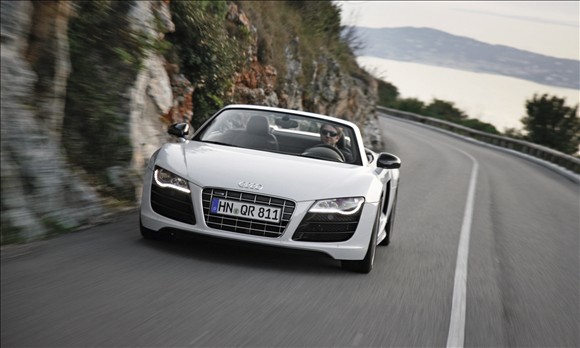
Audi R8 Spyder

Price: $127,700
One of the great sports cars of our age, Audi's scintillating R8 Spyder combines a drop-top, a deluxe interior, midengine V8 or V10 power and all-wheel drive into a unique, 3,600-pound package. A wonderful, new 7-speed dual-clutch automatic transmission puts the one old R8 complaint — balky shifting — to bed, plus there is a fresh grille and LED lighting all around.


Audi A5 Cabriolet

Price: $43,350
The Audi A5 is best known as a premium midsize sedan; the A5 convertible retains the sedan's understated up-market goodness and asks nothing in styling or reduced space for the Cabriolet trim. Freshened for 2013 with a new grille, wheels, lights and electrically assisted steering, the A5 drop-top is available in front- or all-wheel-drive versions. Both are classy, if not particularly speedy, open-air cruisers.


BMW 1-Series

Price: $36,900
BMW's compact convertible is available in two distinct versions. The base 128i with a 3.0-liter 230-horsepower inline 6-cylinder engine is wonderfully smooth and has adequate power, while the new-for-2013 135is turbo version puts out 320 horses worth of fun for $11,000 more. Inherently zippy thanks to its compact size, the 1-Series is understandably a little cramped in back.


BMW 3-Series

Price: $47,600
Here's an entry-level luxury car with open-air panache and BMW's legendary superb driving dynamics. The only red flag about the 3-Series convertible: It's a pricey number, and options quickly make it more so. Also, there's a new 4-Series lineup coming later in 2013, which will become BMW's new name for the current 3-Series coupes and convertibles (sedans remain 3-Series).


BMW Z4

Price: $47,350
BMW's pure sports car has softened lately, adding a retractable hardtop and a turbocharged 4-cylinder as its base engine for fuel economy. But the twin-turbo 6-cylinder options remain, and few will fault the bones of the long-hood, short-deck sportster. As with all BMWs, there's price premium, but for a stylish sports car perfect for touring, the Z4 is tough to beat.


Chevrolet Corvette Stingray convertible

Price: $61,000 (estimated)
The world is agog over the all-new 2014 Corvette Stingray coupe scheduled to arrive in the last quarter of 2013. We must wait until very late in 2013 — or early 2014 — for the convertible version, but it'll surely be worth it, with its massively powerful 6.2-liter V8 engine, vastly upgraded interior and latest performance and technology features.


Chevrolet Camaro ZL1 convertible

Price: $59,545
With 580 horsepower and 556 lb-ft of supercharged V8 power under the hood, the top-dog Camaro ZL1 can power any daydream. It also offers an automatic transmission, which its more powerful arch rival Shelby GT500 convertible doesn't. Decent ride quality helps give this hyperdriven Camaro a high-end "touring" quality, while the boy-racer plasticky interior takes it away.


Ferrari 458 Spider

Price: $257,000 (estimated)
Ferrari fans can chose between the more traditionally statuesque California sports tourer for a mere $200,000 or opt for the snarling midengine 458 Spider. Its two-piece aluminum roof electrically folds and stows in just 14 seconds — about the longest it takes this pure sports car to do anything.


Fiat Abarth 500C

Price: $24,500 (estimated)
New this spring, the fabric-topped version of the Fiat Abarth is exactly what it sounds like, a Fiat 500 with the 160-horsepower Abarth engine and a ragtop that folds back to let you feel the sun and hear the exhaust note. In other words, it's the same quirky Fiat runabout, but with a little more flair for clement climates.


Ford Mustang

Price: $27,200
We selected the power-drunk ZL1 Camaro to represent the Bow Tie pony car drop-tops, and we're picking the entry-level Mustang V6 to represent the Mustang corral of three convertibles (in V6, GT and GT500 trims). It's affordable and fuel-efficient, and it boasts an excellent 307-horsepower V6 engine. Daily driving and weekend romps are all fun in this one.


Jaguar F-Type

Price: $70,000-plus (estimated)
Jaguar is revisiting its sports-car roots with the all-new F-Type. Designed for serious drivers, the classy throwback packs either a V6, supercharged V6 or supercharged V8 engine into an aluminum, rear-drive chassis. Pricing enters hot, upper-end Porsche territory with the big engines, but so does the performance. Look for it this summer.


Jeep Wrangler

Price: $22,195
Is the elemental Jeep Wrangler a convertible? Of course! Sure, there's no power-top option, but the Wrangler is a topless vehicle at heart, with the option of adding a soft- or hardtop cap. This means that totally open-air beach, city, mountain and desert driving is always available, either on the road or in the dirt, with two or four doors.


Lexus IS-F convertible

Price: $65,000 (estimated)
From the rumor files is the long-awaited IS-F convertible. It's said to be coming in 2013, possibly this summer, and the pundits forecast an otherwise unchanged folding hardtop version of the IS-F sedan. That means at least a 5.0-liter 416-horsepower V8 engine and an 8-speed automatic transmission. The drop-top should inject more excitement into this capable if somewhat sterile sport coupe.


Mazda MX-5 Miata

Price: $23,720
If there is a poster child for the modern convertible, Mazda's Miata is it. Perky, fuel-efficient, nicely if not lavishly appointed, the Miata is all about rear-drive fun and affordability. There's a new-generation Miata coming in 2014, so the current car gets minor upgrades for 2013, but in its price class it's still the leader.


Mercedes E-Class Cabriolet

Price: $52,000 to $67,000 (estimated)
Coming soon to your Mercedes-Benz dealer is the moderately upgraded 2014 E-Class line, including the sophisticated 2-door Cabriolet. A convertible for the discerning driver needing room for at least four, the E-Cab gains a new fascia and lighting, a new shifter and freshened interior, but retains the existing powertrain. Essentially a refined coupe, the cab is a sunny-day treat.


Mercedes SL-Class

Price: $105,500
Mercedes offers an amazing array of drop-top 2-seaters, from the entry-level SLK to the über-premium SLS. In between is the SL-Class, which has been thoroughly updated for 2013. Boasting twin-turbo V8 power, the muscular SL line is jammed with technology and has a power-folding hardtop, of course. If you have the means, this is how to put the grand in grand touring.


Nissan 370Z Roadster

Price: $41,470
Nissan's pure 2-seat sportster hit the powder room for a 2013 face lift. The results are a few fashion tweaks and a return of the familiar 3.7-liter 332-horsepower V6 powertrain. Stepping up to the even sportier Nismo iterations gains 18 horsepower and a few more accents; an all-new 370Z is due later next year as a 2015 model.


Porsche 911 Cabriolet

Price: $108,000
Porsche offers 12 versions of its iconic rear-engine 911, half of them convertibles and all of them sports cars with a bent for luxury. There's something here for everyone with at least $100,000 to blow on a pure sportster, including all-wheel drive and 500 turbocharged horses. Our favorite is the Carrera S Cabriolet.


Porsche Boxster

Price: $49,500
Call us purists, but the essence of Porsche's exhilaratingly light and spare sports-car persona is best exemplified by the midengine Boxster. That it is also the least expensive Porsche only enhances our enjoyment of the Boxster's corner-happy athleticism, 164-mph top speed and reasonable 30-mpg highway mileage. Pony up $10,000 for the S version to get an additional 50 horsepower.


VW Beetle Convertible TDI

Price: $27,895
Volkswagen chopped the cutesy New Beetle's top in 2012, and now the 2013 convertible gets the same — welcome — treatment. For once the fashion statement is functional. Unused front headroom was traded for needed rear noggin space — and the power top is one of the speediest to stow. The diesel option makes big sense, too.


Longtime Road & Track contributor Tom Wilson's credits include local racing championships, three technical engine books and hundreds of freelance articles.